Pot Plant Coloring Page: A Versatile Asset for Creative Workflows and Product Creation
Coloring pages have moved far beyond simple children’s activities. For adults, they offer a focused way to unwind, practice mindfulness, and explore creativity. For creators, entrepreneurs, and publishers, a well-designed set of printable coloring sheets can serve as a foundational resource for multiple projects and business streams. The Pot Plant Coloring Page Bundle provides exactly that kind of flexible asset—a collection of botanical houseplant illustrations that work in personal relaxation sessions, educational settings, and commercial product development. Understanding how to integrate this bundle into your workflow can help you maximize its value whether you are coloring for yourself, teaching others, or building a digital product line.
This article walks through practical ways to incorporate the Pot Plant Coloring Page into your routines and processes. We’ll cover what the bundle contains, where it fits before, during, and after a creative or business project, how it interacts with other tools and platforms, and concrete tips for preparation, organization, quality control, and long-term use.
What the Pot Plant Coloring Page Bundle Offers
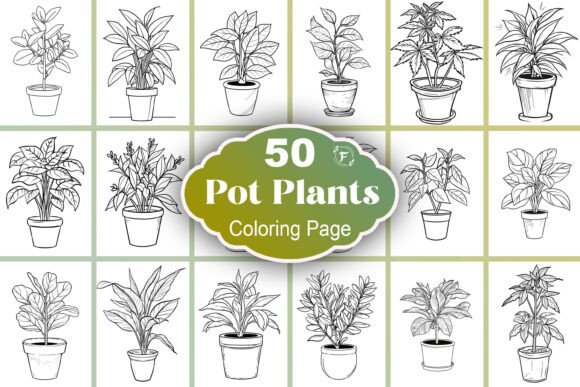
At its core, the bundle delivers 50 JPG files, each sized at 2550 x 3300 pixels (8.5 x 11 inches) in RGB color. The illustrations focus on potted plants with clean line art, balanced compositions, and crisp detailing. This design approach ensures that the pages print well at standard letter size and work equally well on screen for digital coloring apps. The high resolution and consistent formatting make the files ready to use without additional editing, which is a significant time saver for anyone working under production deadlines.
The botanical theme—potted houseplants, leaves, stems, and pots—appeals to a wide audience. Plant lovers, mindfulness practitioners, educators, and designers all find something usable. The line art is detailed enough to engage adults who want a meditative coloring experience, yet clear enough for children who are developing fine motor skills. This dual applicability increases the bundle’s value across different use cases.
Before a Project: Planning and Preparation
Integrating the Pot Plant Coloring Page into a workflow begins before you even open a file. Whether your project is a personal relaxation session, a classroom activity, or a digital product launch, a few upfront decisions will streamline execution.
Define Your Output Format
Decide whether you will print the pages or use them digitally. For print, check that your printer handles 8.5 x 11 inch paper and that your color settings (RGB vs. CMYK) match your printer’s capabilities. The bundle provides RGB files, which are ideal for screen viewing and most home printers. If you plan to use a professional print shop for book interiors, you may need to convert to CMYK—but the high-quality JPGs give you a good starting point. For digital coloring, the PNG-compatible resolution works well in apps like Procreate, Photoshop, or even free programs like Krita. Early preparation means less rework later.
Organize Your Files
The bundle arrives as a zip folder containing 50 JPGs. Before you start coloring or publishing, unzip the folder and rename files if needed. Consistent naming conventions—for example, “pot_plant_01.jpg,” “pot_plant_02.jpg”—make it easier to locate specific images when building a book or selecting pages for a workshop. Create subfolders if you plan to separate simple designs from more complex ones. This small organizational step saves time during the actual work phase.
Set Up Your Coloring Environment
If you are using the pages for personal mindfulness, prepare your materials in advance. Select a set of colored pencils, markers, or watercolors that work well with standard printer paper. Test a single page to see how the line art handles the medium you prefer. For brush pens, consider printing on slightly heavier paper. For digital use, import the JPG into your chosen app and adjust the canvas size to fit your screen. Having everything ready before you sit down to color removes friction and helps you stay in a calm, focused state.
During the Creative or Production Process
The Pot Plant Coloring Page bundle becomes active in different ways depending on your role. Below are three common scenarios that show how the pages integrate into real work.
Personal Mindfulness and Creative Play
When you are coloring for yourself, the process is straightforward: choose a page, pick your colors, and engage. The botanical motifs naturally encourage slow, deliberate strokes—filling in a leaf vein, shading a pot rim, deciding on a color palette. The clean line art reduces decision fatigue; you can focus on the act of coloring rather than struggling with unclear outlines. For deeper relaxation, combine the coloring session with soft background music or a timer. Because the bundle includes 50 unique designs, you can rotate through them over weeks without repetition, maintaining novelty and sustained interest.
Classroom and Homeschool Activities
Educators and parents can use the pages before, during, and after a lesson. Before a plant unit, hand out a coloring sheet to spark curiosity about different houseplant shapes. During the lesson, have students color while you talk about plant parts—roots, stems, leaves—using the illustrations as visual references. After the lesson, the finished pages can be displayed or compiled into a class book. The consistent sizing (8.5 x 11 inches) means all pages fit standard binders or folders, simplifying storage. To extend the activity, ask students to label the plant parts on the coloring sheet or research the type of plant shown.
Digital Product Creation for Entrepreneurs
This is where the bundle truly shines as a business asset. If you sell on Etsy, Creative Market, Creative Fabrica, or similar platforms, the 50 JPG files can be repurposed into several product types without starting from scratch.
- Printable coloring bundles: Sell the entire set as a digital download. Add a cover page and simple instructions to create a complete package.
- KDP interior books: Use the pages as interior content for low-content or medium-content books on Amazon. The 8.5 x 11 inch size matches standard book trim sizes like 8.5 x 8.5 or 8.5 x 11. Import each JPG into a word processor or design tool, add a cover, and publish.
- Seasonal collections: Group specific plants that fit a season—for example, “Winter Succulents” or “Spring Houseplants”—and market them as themed packs.
- Educational printables: Combine the coloring pages with worksheets on plant care, photosynthesis, or botany vocabulary. The visual consistency ties the materials together.
The bundle interacts directly with the platforms’ requirements. JPG format is universally accepted, and the high resolution ensures that previews look sharp. You can also edit the files in Photoshop or Canva to add watermarks, adjust contrast, or overlay text for promotional materials. The clean line art makes it easy to create black-and-white interiors that print well on standard book paper, which is essential for KDP book production.
After the Project: Organization, Quality Control, and Reuse
Once a coloring session or product launch is complete, the work doesn’t end. Proper after-project steps ensure you can reuse the bundle efficiently and maintain quality across multiple outputs.
Digital Storage and Archiving
Keep the original zip folder and the unzipped files in a dedicated folder on your computer or cloud storage. If you have edited any files—for example, resizing, converting to grayscale, or adding annotations—save those versions with a clear naming suffix (“_bw” for black-and-white, “_resized” for different dimensions). This prevents confusion later. For entrepreneurs, tracking which products use which pages helps you avoid duplicating the exact same content across your store.
Quality Checks for Printed Products
Before releasing a book or printable bundle, print a test page from each file you intend to use. Check that the line art is crisp, the paper size is correct, and no compression artifacts appear. The original JPGs are high quality, but saving and resaving can degrade them. Always keep an unaltered master copy. For KDP interiors, ensure that the files are in the correct color space (grayscale or CMYK) and that they meet Amazon’s margin requirements. A small investment in proofing saves returns and negative reviews.
Repurposing for Long-Term Use
The 50 designs are a library you can draw from repeatedly. Combine them with other resources—like a set of botanical stickers, a plant identification guide, or a journal template—to create new products. For personal use, rotate through the pages across different seasons or moods. If you teach a plant unit annually, the same bundle provides fresh content each year because kids (and adults) will interact with the pages differently over time. To keep it interesting, vary the coloring medium: try watercolor on one page, marker on another, and colored pencil on a third. The clean line art accommodates all these approaches.
Practical Implementation Tips
Based on real workflows, here are actionable tips to get the most out of the Pot Plant Coloring Page Bundle.
Batch Processing for Product Creators
Set aside a single block of time—two to three hours—to process all 50 files. Open each JPG in your image editor of choice. If you plan to sell on KDP, convert each to grayscale and adjust the brightness/contrast to ensure the lines are dark enough. Save them into a separate “book interior” folder. If you plan to sell on Etsy as a printable pack, design a cohesive cover and preview images. Batch processing reduces context switching and helps maintain visual consistency across pages.
Mix and Match for Themed Sets
Not every product needs all 50 pages. To create a smaller pack, select 10–15 designs that share a common aesthetic—for example, succulents, tall leafy plants, or flowering pots. Group them in a new folder and give the set a descriptive name. This allows you to create multiple niche products from one bundle, which can improve your store’s search visibility for specific keywords.
Test Compatibility with Your Tools
Before a big launch, test how the JPGs behave in your primary software. If you use Affinity Publisher, Canva, or Adobe InDesign for book layout, import a few pages and check that the resolution remains intact when scaled. Some tools automatically compress images; adjust your export settings to maintain 300 dpi for print. For digital coloring in Procreate, test that the layer opacity and background are properly handled. The files are RGB, so they appear correctly on screens, but if you switch to CMYK for print, check for slight color shifts. Minimal pre-testing prevents last-minute panic.
Organize by Skill Level
The bundle likely includes both simple and complex designs. For educators, sort pages by difficulty to match student age or ability. For adult colorists, you can offer “beginner” and “advanced” packs as separate products. A quick sorting pass after unzipping saves time later and helps you tailor the experience to different users.
Long-Term Value and Consistency
A well-designed coloring page bundle is not a one-use asset. The Pot Plant Coloring Page offers long-term value through its adaptability. For personal users, the 50 pages provide weeks of daily coloring practice. For creators, the same files can be the foundation of a series of products that evolve over months. Because the line art is consistent in quality and style, your customers or students will recognize a coherent theme across your materials, which builds trust and brand identity.
To sustain that value, periodically revisit the master files. If you update your product line, you may want to add new cover styles or reformat the pages for different platforms. The original bundle remains unchanged, but you can create new derivative works from it. For example, after a year, produce a “Volume 2” using a different color palette or orientation—by then, your audience will be ready for fresh variations.
Consistency in output also matters. If you use the same bundle to create a KDP book, a printable pack on Etsy, and a series of classroom worksheets, ensure that all products follow the same naming, sizing, and quality standards. This makes cross-promotion easier and prevents confusion for customers who might buy multiple products. The bundle’s standard 8.5 x 11 inch size helps maintain uniformity across different sales channels.
Final Observations
The Pot Plant Coloring Page Bundle is more than a set of pretty pictures. It is a practical resource that fits into personal relaxation workflows, educational lesson plans, and commercial product pipelines. By thinking about how you will use it before, during, and after your project, you can avoid wasted time and extract maximum value. Whether you are a hobbyist looking for a calming evening activity or a digital publisher building a product library, the key is to treat the bundle as a modular component—one that can be combined with other tools, formatted for different outputs, and reused across seasons and years.
Start by unzipping the folder and exploring the designs. Print one test page, color it with your preferred medium, and assess the experience. From that single action, you will quickly see whether the product fits your personal or professional needs. Then, apply the organizational and integration strategies described here to move from casual use to sustained, productive application. The botanical charm and clean design of these pot plant illustrations are the foundation—your workflow determines how far that foundation will take you.