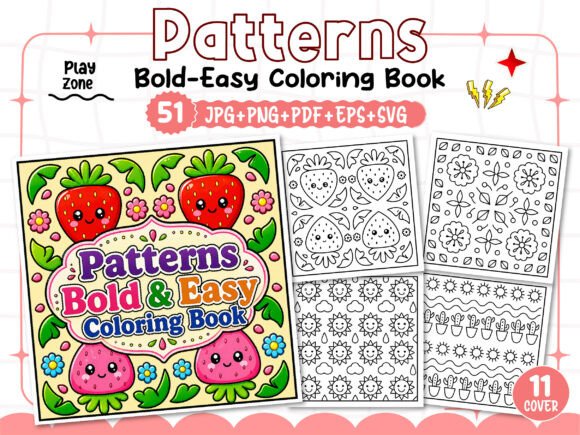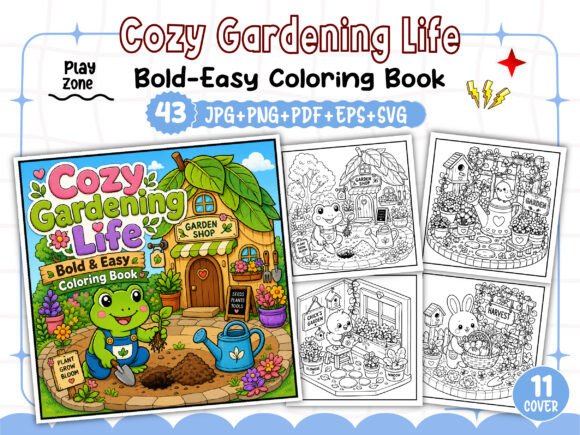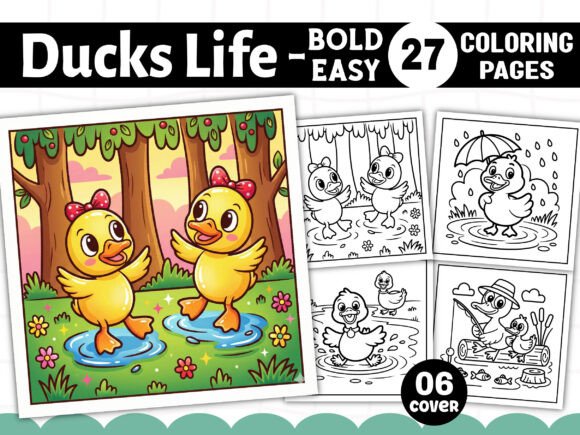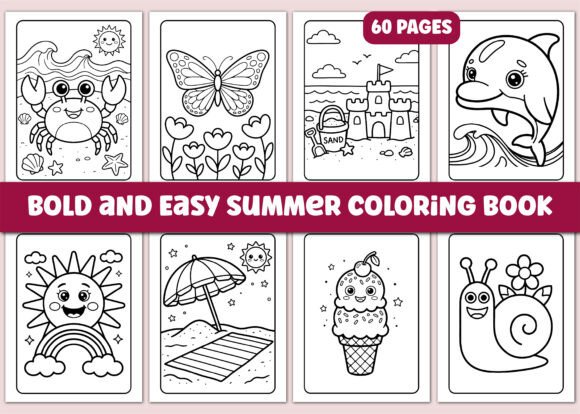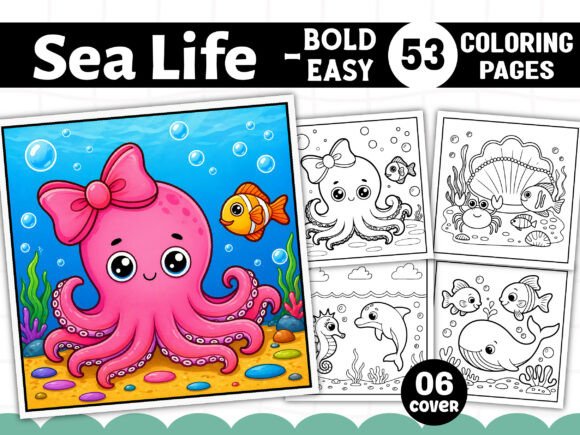
Bold Easy Sea Life Coloring Book Pages
If you are exploring interior options for a low-content or no-content book on Amazon KDP, you have likely come across the growing demand for bold and easy sea life coloring book pages. The appeal is understandable. Ocean-themed designs with thick lines, minimal detail, and open spaces offer a relaxing experience for adults who want to unwind without the frustration of intricate patterns. However, not every set of pages you download will deliver the quality your buyers expect. Many self-publishers rush to assemble an interior, only to discover that their book looks unprofessional, prints poorly, or fails to satisfy the very audience they hoped to reach.
Why Page Format and Resolution Matter More Than You Think
A common oversight when selecting coloring book pages for a KDP interior is assuming that any black-and-white PDF will work. The reality is more demanding. Coloring enthusiasts, especially adults who have tried dozens of books, notice when lines are fuzzy, when the image loses clarity at print size, or when the file compresses details into mud. A page that looks crisp on your screen at 72 DPI can appear jagged and disappointing when printed at 300 DPI. This is why the specification of 300 DPI resolution is not just a technical detail—it is a baseline for credibility. When you choose a set like Bold Easy Sea Life Coloring Book Pages with high-resolution files, you are ensuring that every jellyfish tentacle, every sea turtle shell, and every wave outline remains sharp and inviting. Low-resolution pages signal amateur work and lead to negative reviews that are hard to reverse.
Format Assumptions That Can Derail Your Interior
Many beginners make the mistake of thinking that one PDF file is all they need. While a print-ready PDF is essential, the flexibility offered by multiple formats protects you from unexpected platform requirements or personal workflow changes. The standard interior download for bold and easy sea life designs typically includes PDF, PNG, JPG, SVG, and EPS. Each format serves a distinct purpose. The SVG and EPS files allow you to resize elements without losing quality if you want to rearrange pages or adjust margins. The PNG and JPG versions give you quick preview options and make it easy to test the design on different paper simulations. If you only have a single PDF, you are locking yourself into one layout with zero room for adjustment. That lack of flexibility can become a problem when you realize your trim size needs tweaking or when you want to create a version with slightly different page ordering.
The 8.5 x 8.5 Inch Size: A Smart Choice with Hidden Considerations
The 8.5” x 8.5” square format is popular for coloring books because it feels balanced in hand and fits standard printing setups. But this size also comes with expectations about margins, bleed, and gutter space. Some sellers mistakenly center the artwork on the page without accounting for the binding. If the design is too close to the spine, the user has to crack the book or lose part of the image. High-quality bold and easy sea life pages include proper margins so that each illustration sits comfortably inside the safe zone. When you review your interior, test the outermost pages. Open your PDF in a reader, print a sample, or use a two-page spread view. If the left side of a left-page design disappears into the gutter, your buyers will feel cheated. That small detail can turn a relaxing coloring session into a frustrating one.
Overlooking the Variety in Sea Life Themes
Another mistake is choosing a set that looks repetitive. Bold and easy sea life should include more than just fish. Adults who buy these books are looking for a range of creatures and scenes—octopuses, seahorses, coral formations, starfish, whales, jellyfish, and maybe a mermaid or two. Variety keeps the experience fresh and gives the buyer a sense of value. If your interior has fifty-three pages but ten of them are nearly identical angelfish, the book feels padded. Check the sample images carefully. A collection that features 53 unique designs in black and white, each with a distinct composition, is what keeps customers turning pages. Look for sets that include both single-subject pages and slightly busier underwater scenes, so there is something for every mood.
The Cover: Your First and Often Only Impression
One of the most overlooked details in KDP interiors is the cover. Many download packages include free PNG covers, and you should absolutely use them. But using a cover carelessly—stretching it to fit, choosing a low-res version, or ignoring the bleed requirements—can kill your book’s sales before anyone reads the description. The free PNG book cover included with bold and easy sea life sets is usually designed to match the interior style. Use it as your starting point, but customize it minimally to avoid mismatched fonts or clumsy layout. A cover that clearly communicates “bold lines, easy coloring, sea life” will attract the right audience. If your cover is cluttered or the image looks pixelated, potential buyers will assume the interior is the same quality.
Print Readiness: More Than Just a Pretty File
You have probably heard the phrase “print ready” many times. It is easy to assume that a PDF labeled print-ready is good to go. However, print readiness involves several checks that new publishers often skip. Bleed settings, color mode (CMYK vs. RGB), embedded fonts, and page count all matter. The bold and easy sea life pages you download should be in black and white with no stray color channels. Open the PDF and verify that the black is truly black and not a dark gray composite. Also, confirm that the file includes the correct bleed margin for your printer’s specifications. A common frustration is uploading a PDF that looks perfect in Preview but fails KDP’s print check because of missing bleed or an RGB profile. Avoid this by running the file through a preflight check before you upload.
Understanding Your Audience Beyond the Beginner
There is a widespread belief that “bold and easy” means the book is only for children or absolute beginners. In reality, the adult market for simple, stress-free coloring is enormous. Adults aged twenty to fifty often want a coloring experience that does not require reading glasses, intense focus, or hours of commitment per page. They want to pick up a pen, color a large dolphin tail in two minutes, and feel a sense of accomplishment. If you target this audience correctly, you are serving people who need relaxation, not a challenge. The mistake is marketing your book as “for kids” just because the lines are thick. Instead, emphasize the calming effect, the whimsical designs, and the frustration-free experience. The same pages that work for a busy parent can also appeal to a senior looking for gentle creativity or a college student needing a study break.
What to Check Before You Hit Publish
Before you finalize your interior, make a short checklist. First, verify that all 53 pages are present and correctly ordered. Missing pages are a common error in rushed uploads. Second, check that the PNG, JPG, SVG, and EPS files all match the PDF in content quality and resolution. If the JPG files look compressed, the original source may have been lower quality than advertised. Third, print at least one page of the PDF on your home printer. Look at the line thickness. Are the outlines thick enough to be seen clearly through a marker? Are the white spaces inside the design large enough to be colored comfortably? Fourth, evaluate the variety. Do the designs feel distinct or repetitive? If you can only see variations of the same fish, consider supplementing with another set. Fifth, confirm that the dimensions are exactly 8.5” x 8.5” with the correct bleed. A mismatch here will cause trimming issues.
Why Formats Beyond PDF Give You an Edge
If you are creating interiors for multiple platforms or planning to offer your book in different editions, having access to EPS and SVG files is a real advantage. These vector formats allow you to edit individual shapes, change line thickness, or adjust the entire layout without starting from scratch. You can resize a seahorse to fit a different page orientation or combine several designs into a larger composition. This level of control is especially useful if you want to create a series of books with consistent artwork but varying themes. Without vector files, you are limited to the exact arrangement of the original PDF. Experienced publishers know that owning the files in multiple formats protects their investment and gives them room to evolve their product line.
Making the Most of Your ZIP File
When you receive your download as a ZIP file, it is tempting to unzip it and upload the PDF immediately. But take a few extra minutes to organize the contents. Rename the files if the naming convention is unclear. Store the SVG and EPS folders separately for future edits. Keep the PNG cover file in an accessible location so you can use it for mockups. This small organizational habit saves you time if you later decide to create a paperback version, an ebook version, or a bundled collection. A well-managed interior also gives you confidence when responding to customer questions. You will know exactly what you have and how to reproduce it if needed.
Approaching bold and easy sea life coloring book pages with a clear understanding of what works—and what commonly goes wrong—puts you ahead of many self-publishers. The market is not overcrowded with quality; it is overcrowded with rushed work. By paying attention to resolution, format, margins, variety, and the real needs of your adult audience, you create a product that stands out for its thoughtfulness and usability. That is the kind of interior that earns repeat buyers and word-of-mouth recommendations. And it all starts with choosing a set that gives you not just the pages, but the flexibility and quality to do them justice.