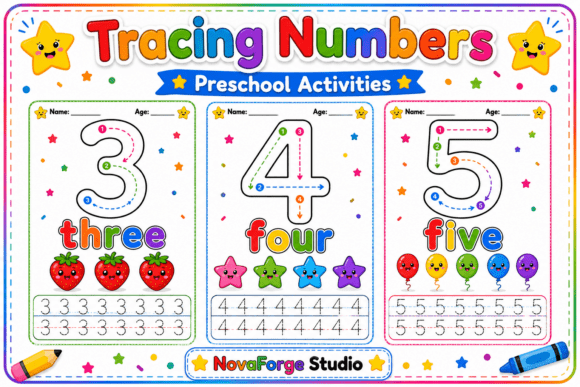
Preschool Numbers 3-4-5 Worksheets: A Strategic Tool for Early Math Foundations
When you are building an early learning curriculum, the difference between scattered activities and intentional design often determines whether a child merely completes tasks or actually internalizes foundational concepts. Preschool Numbers 3-4-5 Worksheets is not just another printable pack to keep children busy. It is a focused resource that targets three critical numerals—3, 4, and 5—through tracing, counting, recognition, and fine motor exercises. For parents, educators, and homeschooling professionals, understanding how to deploy this tool strategically can transform a routine worksheet session into a meaningful learning milestone.
This article examines what this resource offers, why it matters for early math readiness, and how you can use it to support long-term educational goals without falling into common pitfalls like passive busywork or mismatched expectations.
What Makes This Worksheet Pack Different from Generic Printables
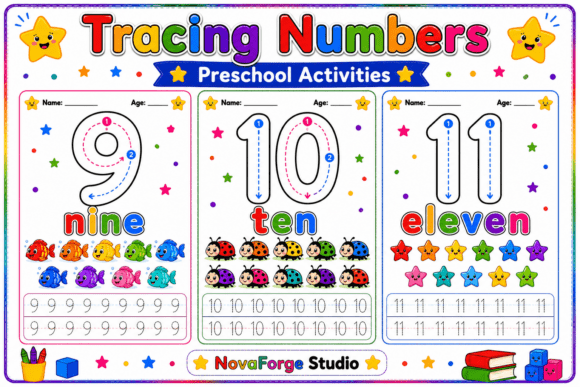
Many early learning worksheets flood the market with generic number exercises that lack coherence or developmental sequencing. Preschool Numbers 3-4-5 Worksheets deliberately narrows the focus to three numbers—3, 4, and 5—allowing young learners to build depth before breadth. The pack includes dedicated pages for each numeral, plus integrated tracing, counting, and recognition exercises that reinforce the same concepts from multiple angles.
From a strategic standpoint, this concentration is valuable because it aligns with how young children learn best: through repetition that feels varied, not monotonous. Each worksheet approaches the number from a slightly different context—tracing the shape, counting objects, identifying the numeral among others—so the child develops a multi-layered understanding. For educators planning a preschool math sequence, this resource fits naturally after introducing numbers 1 and 2 and before moving to 6 through 10.
Strategic Alignment with Early Learning Goals
Using Preschool Numbers 3-4-5 Worksheets effectively requires connecting each activity to a broader learning objective rather than treating it as isolated seatwork. Ask yourself: what specific outcome do you want this session to produce? Are you aiming for numeral recognition, one-to-one correspondence, fine motor control, or all three simultaneously?
For example, if your goal is numeral recognition, the tracing and identification exercises give the child repeated exposure to the shapes of 3, 4, and 5. If counting is the priority, the counting practice pages allow the child to touch, point, and say each number in context. If fine motor development is on your radar, the tracing activities require controlled pencil movement that strengthens hand muscles and prepares for writing.
By mapping each worksheet type to a specific developmental goal, you avoid the common mistake of overloading a child with too many objectives at once. A three-year-old working on number 3 might focus solely on tracing and saying the name, while a four-year-old ready for more challenge could move to counting and comparing sets of 3, 4, and 5 objects.
Practical Planning Tips for Worksheet Integration
Here are several ways to incorporate Preschool Numbers 3-4-5 Worksheets into your teaching or parenting routine without overwhelming the learner:
- Introduce one number per session. Spend an entire day or learning block on number 3 before introducing 4 and 5. This allows the child to master each numeral sequentially.
- Combine worksheets with hands-on manipulatives. After completing a counting page, have the child count three blocks, four buttons, or five crayons. This bridges the abstract worksheet with concrete reality.
- Use the worksheets as a warm-up activity. Before a more complex math lesson, a quick tracing or recognition exercise can activate prior knowledge and set the stage for deeper work.
- Create a number journal. Staple completed worksheets together so the child can see their progress over time. This builds confidence and provides a tangible record of learning.
- Pair with storytelling. Read a counting book that features 3, 4, and 5, then follow with the corresponding worksheet. The narrative context makes the numbers more memorable.
When to Use These Worksheets for Maximum Impact
Timing matters. Preschool Numbers 3-4-5 Worksheets are most effective when introduced after a child has demonstrated basic familiarity with counting from 1 to 10 orally but needs structured practice recognizing and writing specific numerals. This typically occurs between ages 3 and 5, but developmental readiness varies widely.
Signs that a child is ready include: ability to sit for 5–10 minutes of focused activity, interest in holding a crayon or pencil, curiosity about numbers in the environment (clock, book pages, door numbers), and ability to count objects up to 5 with some accuracy. Pushing worksheets before these signs appear can lead to frustration and resistance. Conversely, waiting too long means missing a window of natural curiosity.
For classroom use, these worksheets work well in learning centers, small-group rotations, or as independent practice after a whole-group number lesson. For homeschool families, they fit into a morning basket, a math block, or even as a quiet-time activity for an older sibling to lead with a younger child. The printable PDF format means you can reuse the same set across multiple children or years, making it a cost-effective resource for budget-conscious educators and entrepreneurs creating curriculum packs.
Strategic Observations for Long-Term Learning Outcomes
One of the less obvious benefits of Preschool Numbers 3-4-5 Worksheets is its role in building what educators call number sense—the intuitive understanding of how numbers work, relate, and combine. When a child traces the numeral 3, counts three apples, and then identifies the number 3 among a group of other numerals, they are constructing neural pathways that support later skills like addition, subtraction, and place value.
Number sense is not developed through memorization alone. It requires varied, repeated exposure to numbers in different contexts. This worksheet pack provides exactly that: three different numbers, each approached through multiple activity types. Over time, the child begins to recognize that the symbol “3” represents a specific quantity, that it comes after 2 and before 4, and that it can be written, counted, and seen in the environment.
For entrepreneurs and creators who develop educational content, this resource also serves as a model for how to design focused, goal-aligned learning materials. Rather than creating a massive pack that tries to cover everything, a targeted set like this one gives the end user—whether parent or teacher—a clear pathway for instruction. This increases perceived value, usability, and the likelihood of repeat purchases if you are building a product line.
Risks of Using Worksheets Without Clear Intentions
No educational tool is risk-free, and Preschool Numbers 3-4-5 Worksheets is no exception. The most common mistake adults make is treating worksheets as a default activity rather than a deliberate intervention. Handing a child a worksheet with no context, no goal, and no follow-up can lead to passive completion where the child guesses answers or scribbles without learning.
Another risk is over-reliance on paper-based activities at the expense of movement, play, and conversation. Young children learn math best when they can touch, move, and talk about quantities. Worksheets should supplement, not replace, hands-on experiences. A child who only ever traces numbers on paper may struggle to transfer that knowledge to real-world situations like setting a table with four plates or counting three steps.
There is also the risk of misalignment between the worksheet difficulty and the child’s current ability. If the child is not yet ready to trace numerals, the tracing exercises will cause frustration. If the child already knows numbers 3, 4, and 5 solidly, the pack will feel too easy and boring. The solution is to preview the worksheets, assess the child’s readiness honestly, and adapt the activity accordingly—perhaps using the counting pages for oral practice and skipping the tracing if fine motor skills are not yet developed.
How to Use This Resource Intentionally, Not Randomly
To get the most out of Preschool Numbers 3-4-5 Worksheets, approach it with a simple decision-making framework. First, define the primary goal for the session. Is it introducing a new number, reinforcing an already introduced one, or assessing what the child knows? Second, choose the specific worksheet pages that align with that goal rather than using the entire pack at once. Third, plan a short, engaging follow-up activity that connects the worksheet to movement or conversation.
For example, suppose your goal is to introduce the number 4. You might start by showing the child four fingers, then four toys, then four dots on a page. Next, complete the number 4 tracing worksheet together, talking about the shape and sound of the number. Finally, go on a “find four” hunt around the house—find four spoons, four books, four steps. The worksheet becomes one part of a larger learning experience rather than the entire experience itself.
For educators designing curriculum units, consider using this pack as part of a weekly number study. Week 1: number 3. Week 2: number 4. Week 3: number 5. Week 4: review all three with mixed activities. This pacing allows for deep processing without rushing. The printable high-resolution format makes it easy to print multiple copies for small groups or to create take-home practice packets for families.
Branding and Positioning Considerations for Content Creators
If you are an entrepreneur, blogger, or small business owner creating educational printables, Preschool Numbers 3-4-5 Worksheets is an example of a product that fills a specific niche: focused, no-fluff, developmentally appropriate number practice. When positioning your own products, emphasize the intentional design—this is not a random collection of worksheets but a carefully selected set that supports sequential learning. Highlight the strategic benefits for parents who want to avoid overwhelming their children and for teachers who need quick, reliable resources for learning centers.
In your product descriptions, use language that speaks to the adult’s decision-making mindset. Instead of saying “fun worksheets,” say “targeted practice for number recognition and fine motor development.” Instead of “great for kids,” say “aligns with preschool math readiness standards and supports kindergarten preparation.” This framing appeals to the audience of educators, parents, and professionals who value results-oriented tools.
Long-Term Value Beyond the Worksheets
The ultimate purpose of Preschool Numbers 3-4-5 Worksheets is not to fill a folder with completed pages but to build a foundation for mathematical thinking that lasts. When used well, these worksheets help a child gain confidence with numbers, develop writing readiness, and practice sustained attention—all skills that pay dividends in kindergarten and beyond.
For the adult guiding the learning, the pack offers a structured way to observe the child’s progress. Which numbers come easily? Which require more repetition? Does the child reverse the numeral 3? Can they count objects without skipping or double-counting? These observations inform future instruction and help you adjust your approach in real time.
In a broader context, resources like this one also support the growing ecosystem of printable educational content that parents and teachers rely on for flexibility, affordability, and ease of use. By choosing a well-designed, focused resource, you are investing in a tool that respects the learner’s developmental stage and the educator’s limited time.
The key is to remember that the worksheet is a means, not an end. With clear goals, thoughtful pacing, and a willingness to adapt, Preschool Numbers 3-4-5 Worksheets can be a genuinely valuable component of an early math toolkit.